Featured

About the Job

In love, in art, in avarice, in politics, in labor, in games, we study to utter our painful secret. The man is only half himself, the other half is his expression

-Ralph Waldo Emerson

Hi, my name is Job Sing. Thanks for reading even this much!

This blog came out of an assignment from a class called multicultural literature. In this class we read a lot of really good pieces of literature and found ourselves really immersing ourselves in the cultures that they presented. For each individual culture we wrote a blog post about our thoughts and our recommendations for teachers regarding a certain theme that we noticed in each individual piece that we read. Now we get to share those with you in our website that we created for these blog posts.

The term global has changed throughout the course of history. When one says global today, they mean that exactly. The entire world has been connected and a person in China can read instantly what a man in Mexico writes. This is the global literature that we experience on a daily basis, true sharing of cultures and in many cases full cultural diffusion. However, in the past, no culture was in any way connected in the way that it is now. The cultures of the world are very different and we can view the differences by looking at the literature that they wrote. As a student in a multicultural literature class, I get to experience literature as very few people have ever done in the history of the world: I get to experience many global cultures by reading literature.

What’s more than that, I got to read the difference and the changing of the tides as the world became more connected and boundaries became less defined in literature. The world, beginning in the 20th century was able to share their cultures like never before in history. The best place to witness the change, the best seats in the house, so to speak, is reserved for the literature historian. Literature reflects the moods of the era that people live in. During the romantic era, writers showcased in their flowery and naturalistic writing how the people those days rebelled against the rigid laws of the past and came to love their natural state of things. During the modern period, the depressed and moody writings of the authors in that time period depicted the terror that people felt for the future. In this time period, the writings of the most prominent authors of the world seemed to have characteristics of many different cultures and it became harder and harder to pinpoint a specific culture that each writing represented.

Now as a future English teacher it is important to understand the difficulties in teaching about 20th century literature. This period of history has issues with finding its individuality with the various different cultures that are portrayed in it. Each different culture in this era had an author that portrayed not just that culture, but a different culture that had influenced his writing earlier in his career. It is difficult but necessary to find the trail of cultural tropes back to the source of the identity of the author’s cultural influence.
If Good Men do Nothing

The darkness of the Jewish literature in the 20th century is one of the most visible elements of literature in the history of writing. The authors truly found themselves in the worst possible situations and they hated the state of affairs in the world. Any hope and anything that was not truly dark was latched on to whether it was a big deal or not. In the Spinoza of Market Street, the protagonist finds himself in a terrible situation where he nearly dies. However, thanks to the assistance of a truly ugly lady and the eventual marriage to that lady, he comes out of it with more hope than he deserves. This shows how the Jewish state of mind in this age of the world is so dark and so depressing that they, without any time wasted, instantly latch onto the first good thing that happens to them.

This counters the terrible state of affairs that show why the Jews became so dark and depressed, one of the best pieces that depicts the holocaust that should definitely be used to educate the younger generation about the actions of the Nazis is the book called “This way for Gas, Ladies and Gentlemen.” This piece truly dehumanizes the brutal acts and the terrible tortures for the Jewish people in the concentration camps, and is an invaluable tool to use in order to educate students about the possibilities of humans “If good men do nothing.”

Surface Level…….Weak

The heavy-hitting themes that continue to arise today with the internet being so prevalent in our lives and connecting us to the most gruesome details about the world we live in seem to always have deeper meanings behind the surface of the words that the authors say. In the story ‘And of Clay we are Created’ the author speaks of a man and his quest to free a girl trapped in rubble. In his pursuit of attempting to cheer up the girl, the man finds himself more empathetic and emotional as he tries to cheer up a girl who he begins to realize has no chance for survival. The walls of his heart were stripped away and he found himself opening up in a way he never had thought possible. This connects to the story ‘The Garden of Forking Paths’. This story obviously is about a spy’s murder of a man during World War I, but there is a much deeper meaning behind the story as the spy’s host begins to explain the labyrinth of a book.

This author truly believes that the decisions we make affect us in the most strange ways and can only lead to more strange decisions. These themes can only be brought out by a lot of in-depth research and study of the authors. In my career as a teacher, it will be my job to truly grasp the meaning of a piece of literature more than just surface level stuff so that I will be able to teach about it.

Forgive as You Would be Forgiven

As the cultures of the United States shape minds every day and the people of the United States can not live their lives a single day without experiencing some form of culture clash it is important for teachers to be fully aware of the differences in opinion between their students and the potential clashes that can happen.

               One of the best pieces of literature to explain this phenomenon to the students is “The Man who was almost a man” This extremely short story actually has a lot of good material in it for our purposes. The story depicts the life of a young man and the difficulties that he experiences as his life seems to fall apart after one bad decision he made. Because of the culture and situation he’s in, his life seems to balance on a knife’s point and has no leeway to make any mistake. The difference of his culture to the other culture of people that he lived around was the fact that the other people could make mistakes and not have them haunt them forever. Namely, the other culture had forgiveness and grace, but Dave did not.

               Similarly in the movie Fences, we see a black family who seem to live under no sense of forgiveness. That a single mistake is held against them forever. And they consistently complain about how the white families live differently and can have flaws and mistakes and nobody cares.

               In our culture today we have a lot of colored students who live in a situation where there is no grace for them at school. First offences for colored students have always been treated significantly more severely than first offences for white students. This inequality cannot stand and must be treated differently.

Hearts of Darkness

As a future educator, the pitfalls of the lack of social justice in the classroom will always be present for me. The problems of race in the classroom have never ceased to be a problem in the classroom, even thought the fight for social justice in the United States started almost 100 years ago. In the United States educational system, black students are three times more likely to be expelled from the classroom than white students.

With these injustices still present in the classroom it is our job as English educators to work against this social norm through our subject material. One of the best ways to do this is to show gross exaggerations of the horrors of racism throughout literature. One of the most classic texts that provides good material to this end is Heart of Darkness. This book truly captures the horrors of imperialism where the ‘white man’ takes it upon himself to ‘take care of his black brothers.’ In reality, there always are terrible imperialists who take advantage of their race and enslave the natives of Africa and treat them worse than slaves.

During this same time period, there was a poem entitled ‘The White Man’s Burden’ which was a terrible piece of poetry that told the Americas to do what they though was right for the nations they had just taken in the Spanish-American War. Once explained, this poem will truly haunt the readers as it shows the arrogance held by true racists.

The American Mermaid

In Native American Literature, we find some extremely similar issues that students have today that are often overlooked. Although this is the case with a lot of world literature, as English teachers in the United States, we need to be very aware of the history of the land we live in so as to educate the students about their past. So now we get to the story Yellow Woman. This story speaks of a girl who is trapped between worlds and can not find her way past the enchantment that is the world that the strange man gives her. Very much like the little mermaid tale but there is no happy romance story in the end, the woman experiences a small taste of a world outside her own. She is a romantic woman and a drama queen who simply thinks that her life has way more supernatural and epic happenings than anyone else’s life. She refuses to accept tradition and chooses instead to live a life of love and anarchy. However, she realizes that this lifestyle is not one worth living and goes back to her home where she will life in safe peace. The author, in this story, drives home the fact that reality is much better than anything that we can imagine in our minds, and we shouldn’t trust to what our mind wants but instead what we truly need from life.

We as English teachers need to refute some of the bold claims that Disney and other entertainment companies make. If we don’t then we are setting them up for failure as they will only see the romantic ideas that Disney wants them to see and not the more realist views that we, as mature adults can give them.

The Moral Man

In most of the texts from Eastern Literature there is an understanding and an assumption that is often hard to explain to any person that is used to Western culture and literature. In Eastern literature there is an assumption that every man has entirely moralistic values and a great amount of virtue. Two extremely different cultures such as the Chinese culture during the time of Confucius and the Indians during the writing of the Gita can have very similar views on the value of a virtuous man. In the Gita, the characters continue to define who a wise man is and what a wise man does. And in the Analects of Confucius, Confucius defines what a gentleman is.  These two terms are extremely similar and mean similar things so it is easy to explain these terms to anyone in an Eastern culture but we do not have the right words to translate to our culture what these terms actually mean.

Today in United States society, we do not have as common views on what a virtuous man looks like. The closest we have to a universal value system is the framework of our governments and the laws they pass. This means that the values we uphold are dictated to us in a much broader environment as it is the duty of a man to be virtuous for the government’s sake, whereas in Eastern culture it is the duty of a man to be virtuous for society’s sake. In a classroom environment, I as a teacher can ask about students’ virtue and compare it to the laws that we have today in the United States. While we let the Constitution dictate our lives and the lives of our students, we let great philosophers dictate the lives of the people in the Eastern parts of the world.

Questioning the Unquestionable

           In the modern era, students have become so accustomed to the social norms of what morals and ideals they need to uphold. This is a very common occurrence in the history of the world, and throughout recorded time there have been widely held beliefs that few dared to question, examples include the teachings of the catholic church, the divine right of kings, and the ‘might makes right’ mentality in every time period of history.

               Now in this new time, students are not taught to question common ideals that they believe everyone has. Even in classroom environments students do not think to question what is often taught to them as fact. In one classroom in Idaho, for example, a student was able to get 86% of his classmates to sign a ban on Dihydrogen Monoxide, or H2O, by only giving them details about the damage that water can do without telling them that they were banning water. This highlights the fact that whatever ideals and facts that students are taught in the classroom are not being questioned enough. We as teachers and as mentors need to encourage children to ask questions in the classroom.

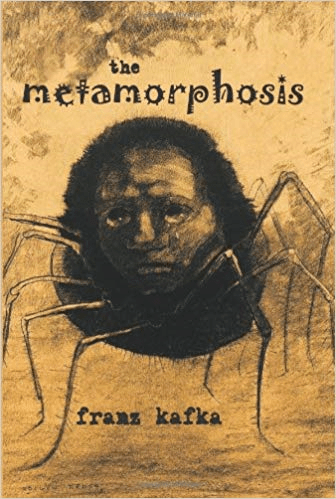
               The story ‘Metamorphosis’ by Franz Kafka questions a very widely held assumption by humans almost universally, that hard work has the final word in the worth or lack thereof in any person. The story revolves around a man who worked so hard he became an entirely different creature, and it questions the amount of value we put in incessant work. In that time, and even nowadays, a man’s worth is often put in the amount he works; this principal led to a lot of extreme levels of work that became very unhealthy but were overlooked as the overworked man was respected and admired. Franz Kafka was one of the few men who truly questioned the validity of this belief and spoke out against it in his book. Like many of the writers in his time frame, Kafka was a revolutionary thinker, fighting against beliefs he believed foolish. He did this alongside Leo Tolstoy in ‘The Death of Ivan Ilyich’ who spoke out against the ideals of the middle and upper class materialism in Russia at the time.

Introduce Yourself (Example Post)

This is an example post, originally published as part of Blogging University. Enroll in one of our ten programs, and start your blog right.

You’re going to publish a post today. Don’t worry about how your blog looks. Don’t worry if you haven’t given it a name yet, or you’re feeling overwhelmed. Just click the “New Post” button, and tell us why you’re here.

Why do this?

  • Because it gives new readers context. What are you about? Why should they read your blog?
  • Because it will help you focus you own ideas about your blog and what you’d like to do with it.

The post can be short or long, a personal intro to your life or a bloggy mission statement, a manifesto for the future or a simple outline of your the types of things you hope to publish.

To help you get started, here are a few questions:

  • Why are you blogging publicly, rather than keeping a personal journal?
  • What topics do you think you’ll write about?
  • Who would you love to connect with via your blog?
  • If you blog successfully throughout the next year, what would you hope to have accomplished?

You’re not locked into any of this; one of the wonderful things about blogs is how they constantly evolve as we learn, grow, and interact with one another — but it’s good to know where and why you started, and articulating your goals may just give you a few other post ideas.

Can’t think how to get started? Just write the first thing that pops into your head. Anne Lamott, author of a book on writing we love, says that you need to give yourself permission to write a “crappy first draft”. Anne makes a great point — just start writing, and worry about editing it later.

When you’re ready to publish, give your post three to five tags that describe your blog’s focus — writing, photography, fiction, parenting, food, cars, movies, sports, whatever. These tags will help others who care about your topics find you in the Reader. Make sure one of the tags is “zerotohero,” so other new bloggers can find you, too.

Design a site like this with WordPress.com
Get started